CALL US TODAY - 020 8742 1556
CALL US TODAY - 020 8742 1556
I returned yesterday from a week hosting a group of Go Fishing clients on Crooked Island, one of the quietest corners of The Bahamas. The trip’s start was a little uncertain; Hurricane Melissa had passed two weeks earlier, and for a while it wasn’t clear whether we would be able to travel. By the time it reached Crooked Island, thankfully the storm had weakened. Power stayed on, roads remained open, and both the accommodation and Gibson’s Restaurant had escaped flooding. The community here is used to adapting to the whims of the weather, and that resilience is quietly apparent as soon as you arrive.
We had two groups fishing over consecutive weeks. The first encountered challenging winds —up to 30mph — which made spotting fish and accurate casting difficult. It was a reminder why practising in less-than-perfect conditions in advance of a trip is essential. Still, the group made the most of the opportunities the flats offered. Windows of better light allowed fish to be found, and the team enjoyed their week despite some challenging weather.
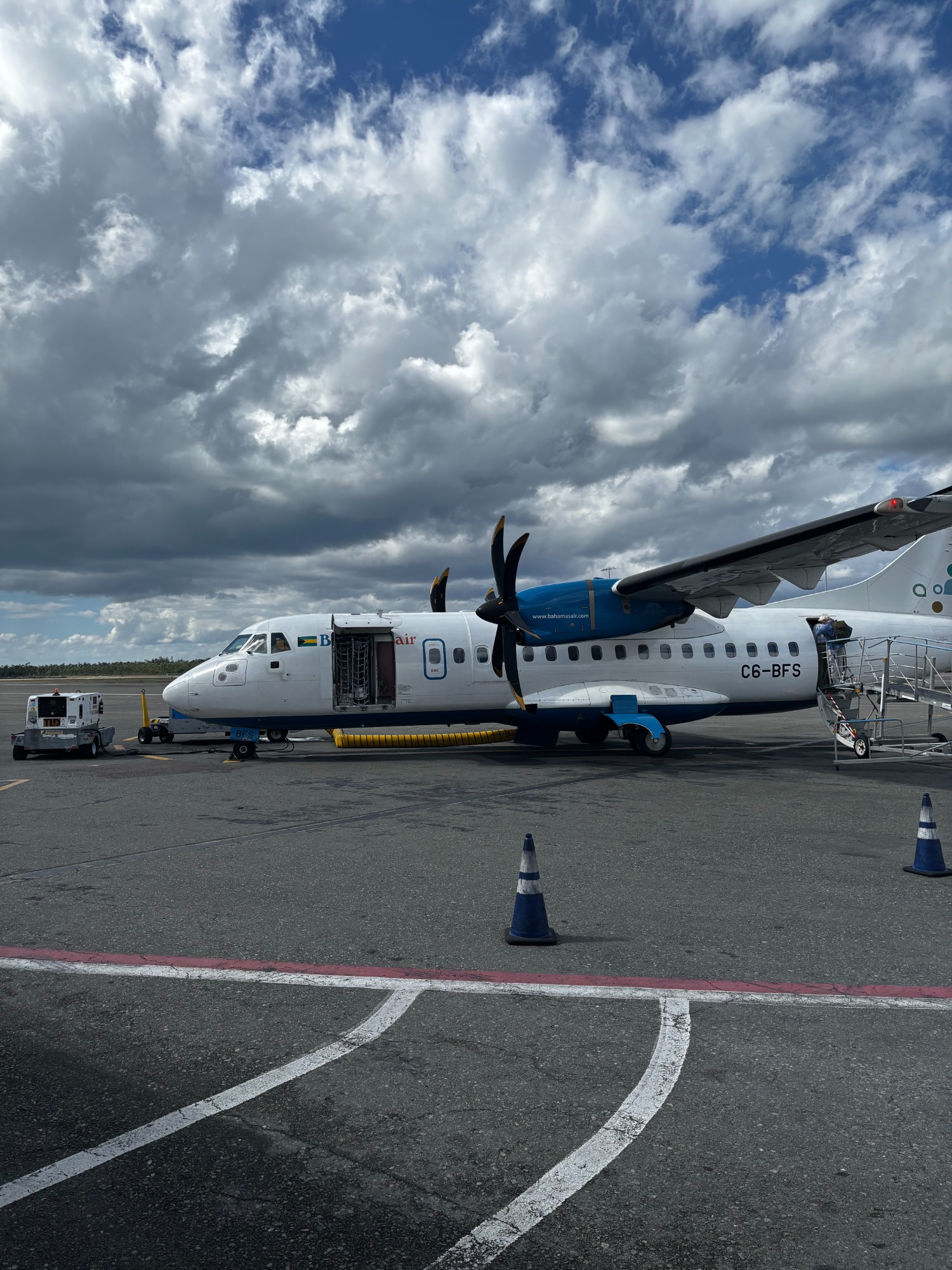
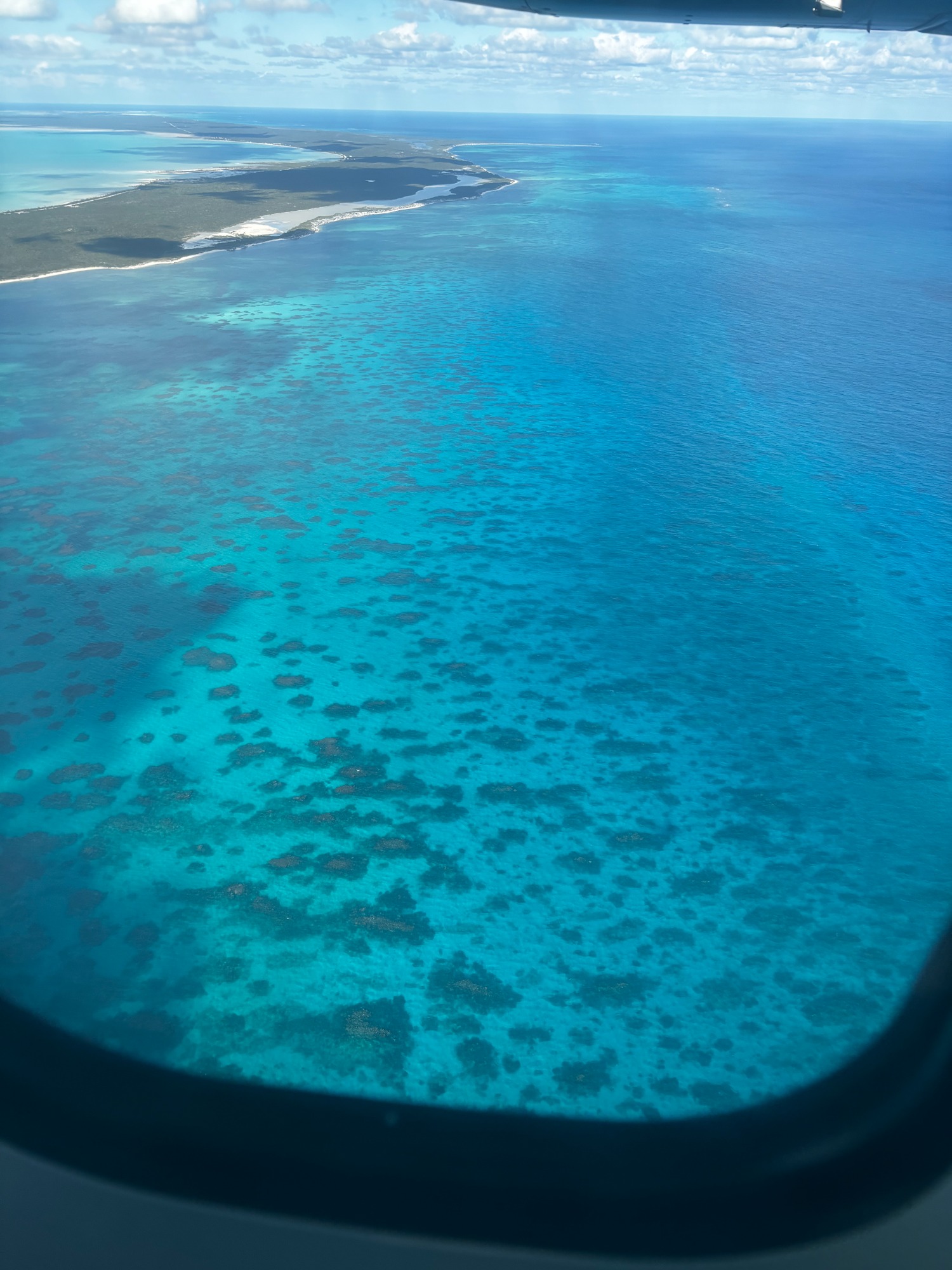
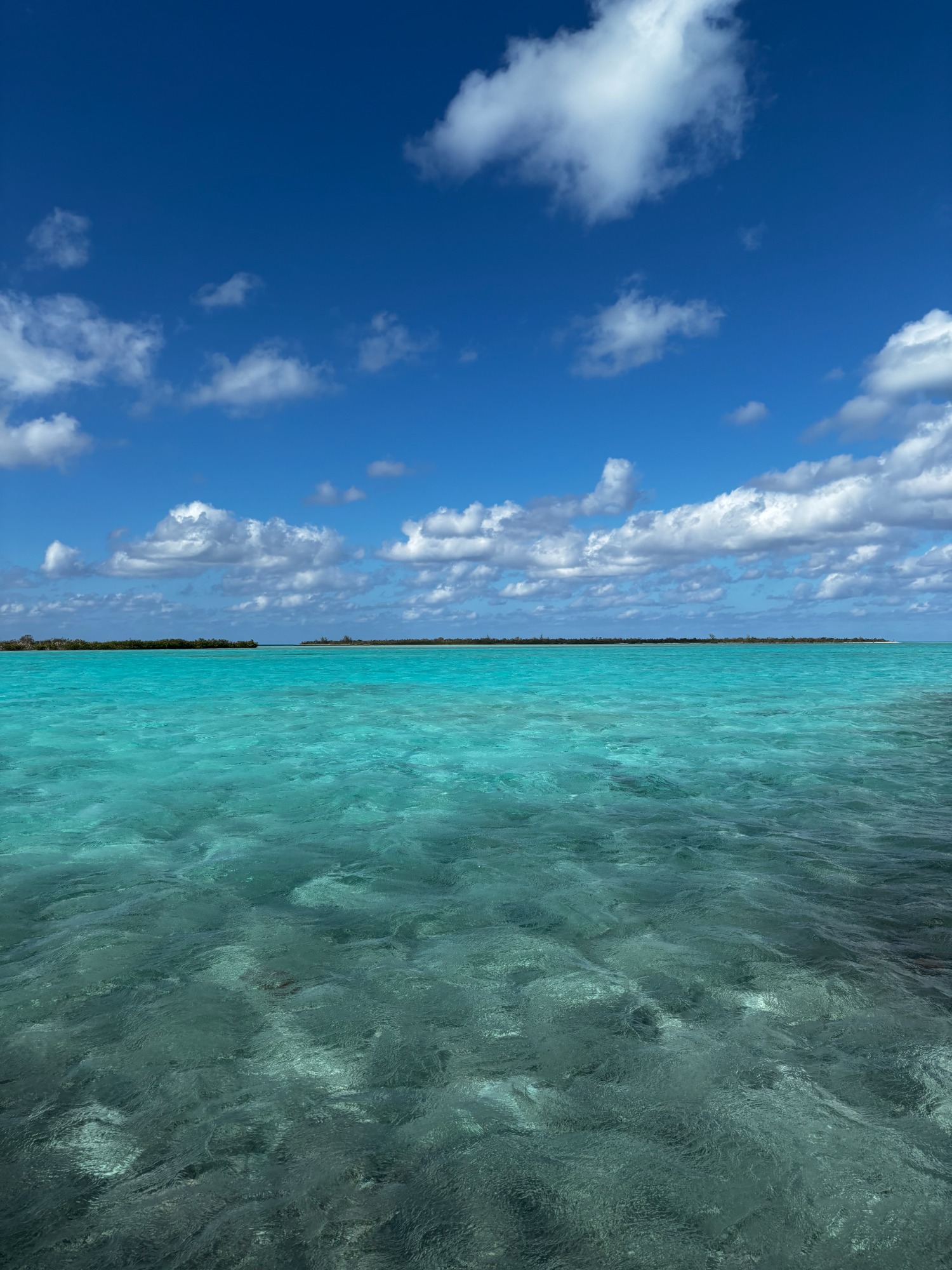
Our week, the second group, arrived with a more promising forecast. The Windy app suggested lighter winds and several settled days ahead. Reports from the previous week of permit and tarpon sightings added a touch of anticipation. After the long flight, a night at the Orange Hill gave the group a chance to unwind and discuss plans. The following morning, we flew on to Acklins and then Crooked Island. As the plane descended, the flats stretched out in shades of turquoise, green, and pale sand.
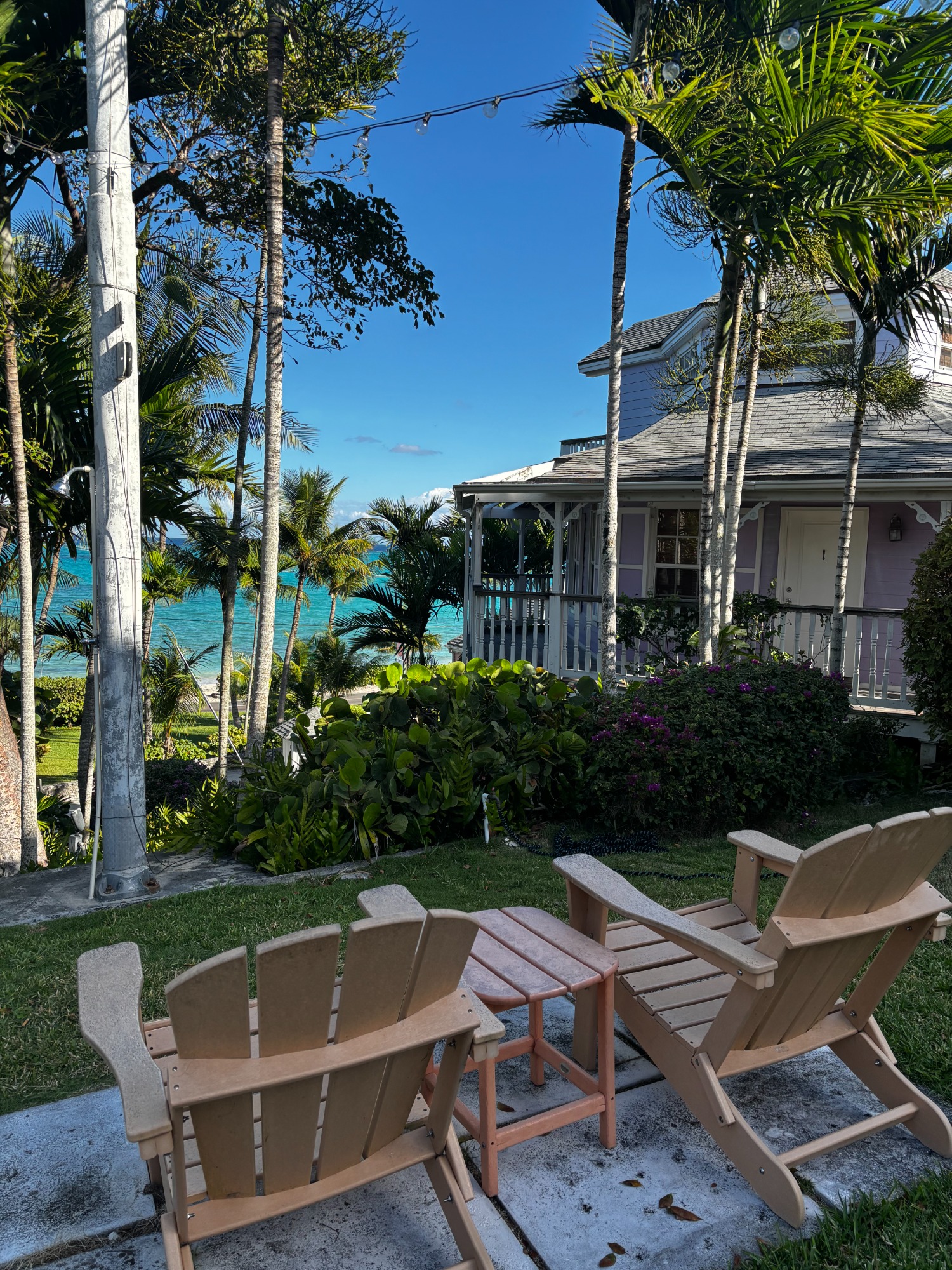
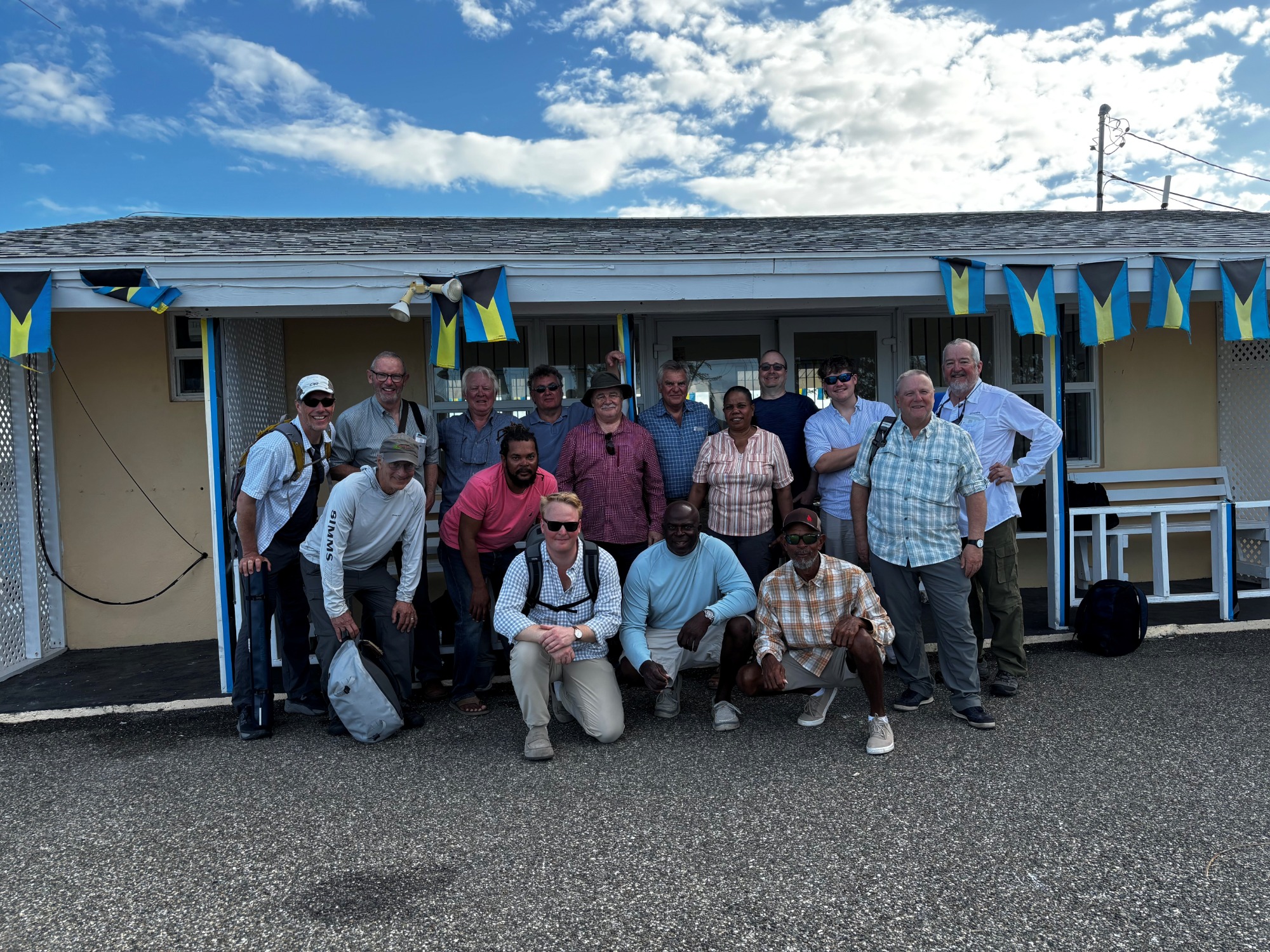
Willie Gibson and her team met us on arrival. Marsha — who usually drives the school bus — was there with her charismatic warmth to transport us to Landrail Point. The drive passes low scrub, glimpses of bright water, and the occasional house or church. Crooked is remote but lived-in; everything moves at a quiet, unhurried pace. Once we settled into our accomodation, we gathered at Gibson’s Restaurant for dinner. Fresh wahoo appeared from the kitchen, which was simply cooked and excellent.
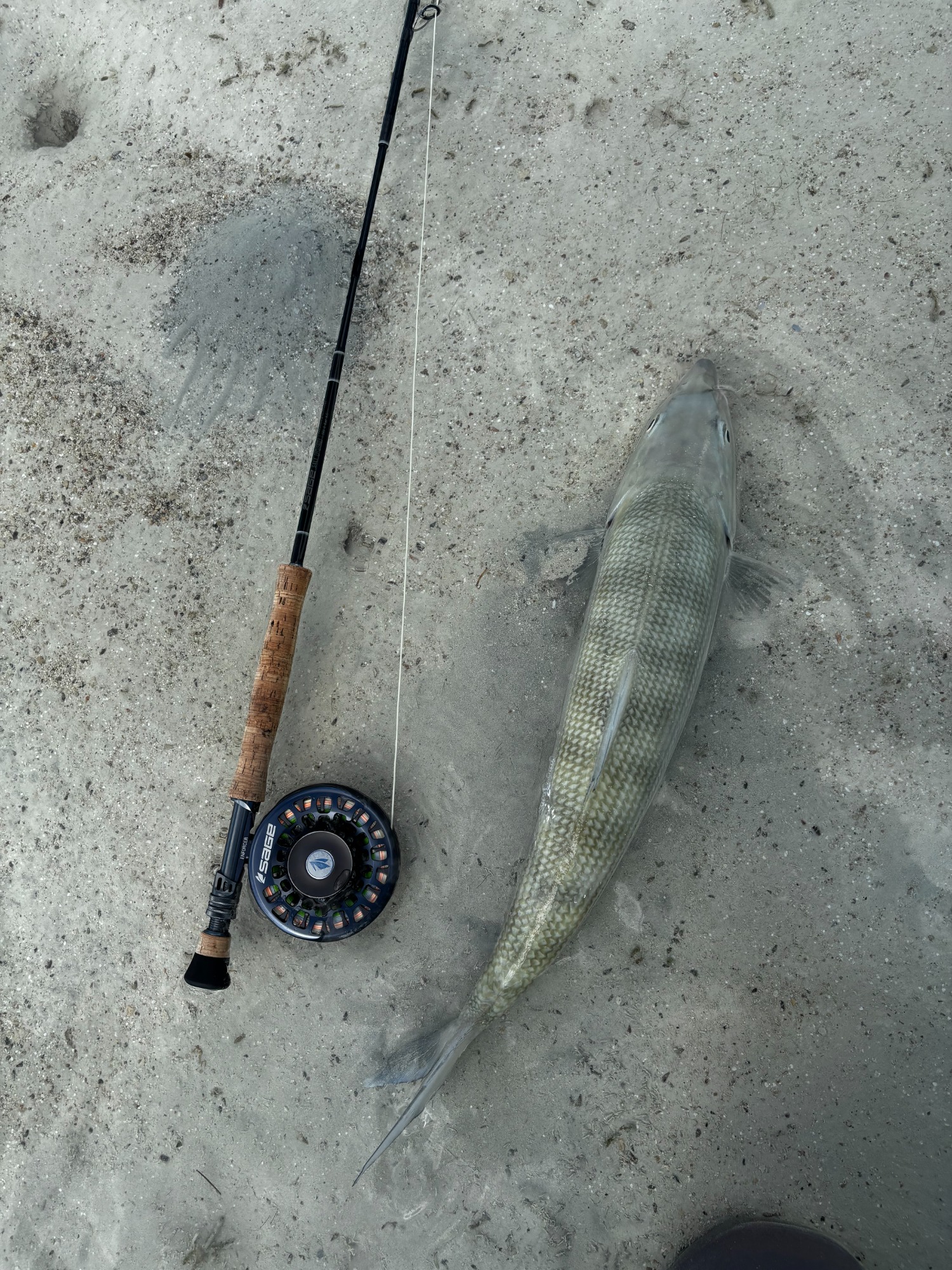
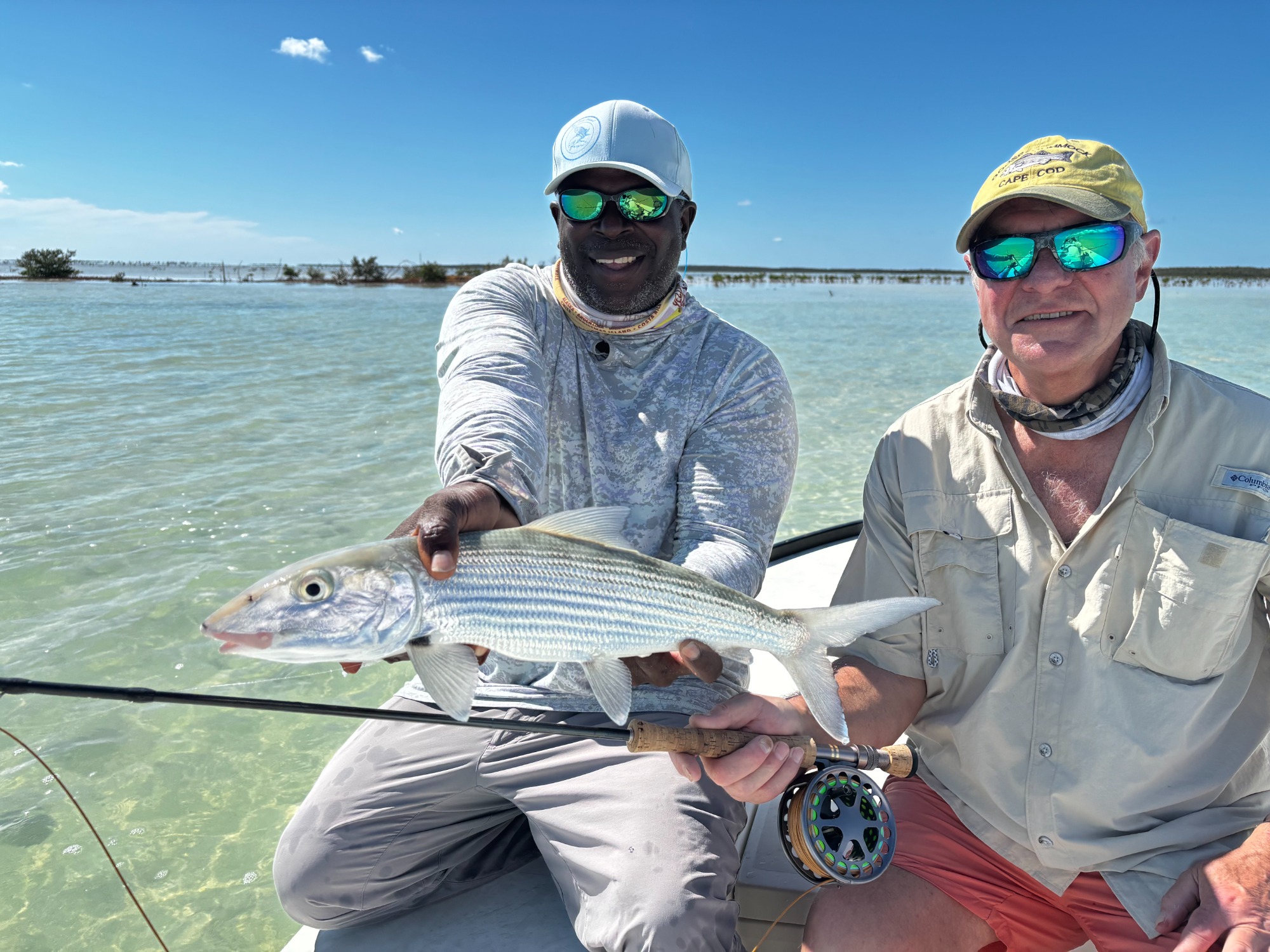
On the first morning, I joined Ian C for his first day of saltwater fly fishing. The conditions were calm, the sun bright, and the water clear. Coco, our guide, spotted fish early and gave precise instructions from the poling platform. By lunchtime, Ian had landed five bonefish in the 3–4lb range. We were lucky with the weather, and the frequent opportunities hopefully accelerated his learning curve of spotting fish, casting accurately and getting the correct retrieve.
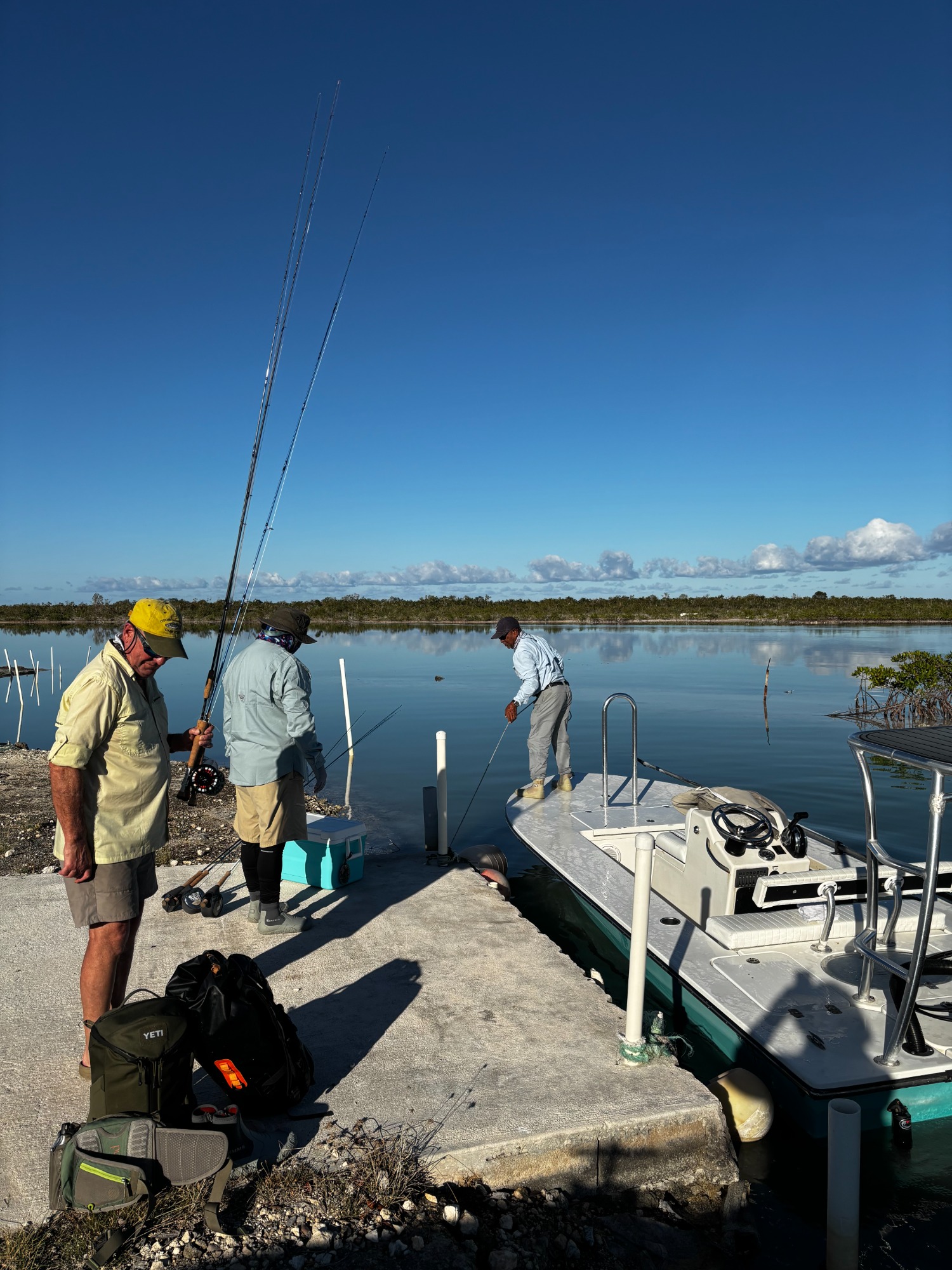
We rotated anglers and guides throughout the week, giving everyone a chance to fish with different members of the team. The guides on Crooked Island are excellent — professional, patient, and invested in both the fishery and the experience of the anglers. On a river you often have a rough idea where fish will hold. On the flats, everything shifts constantly: light, wind, water temperature, tides. The guides are dialled into these changes and work hard to find the fish.
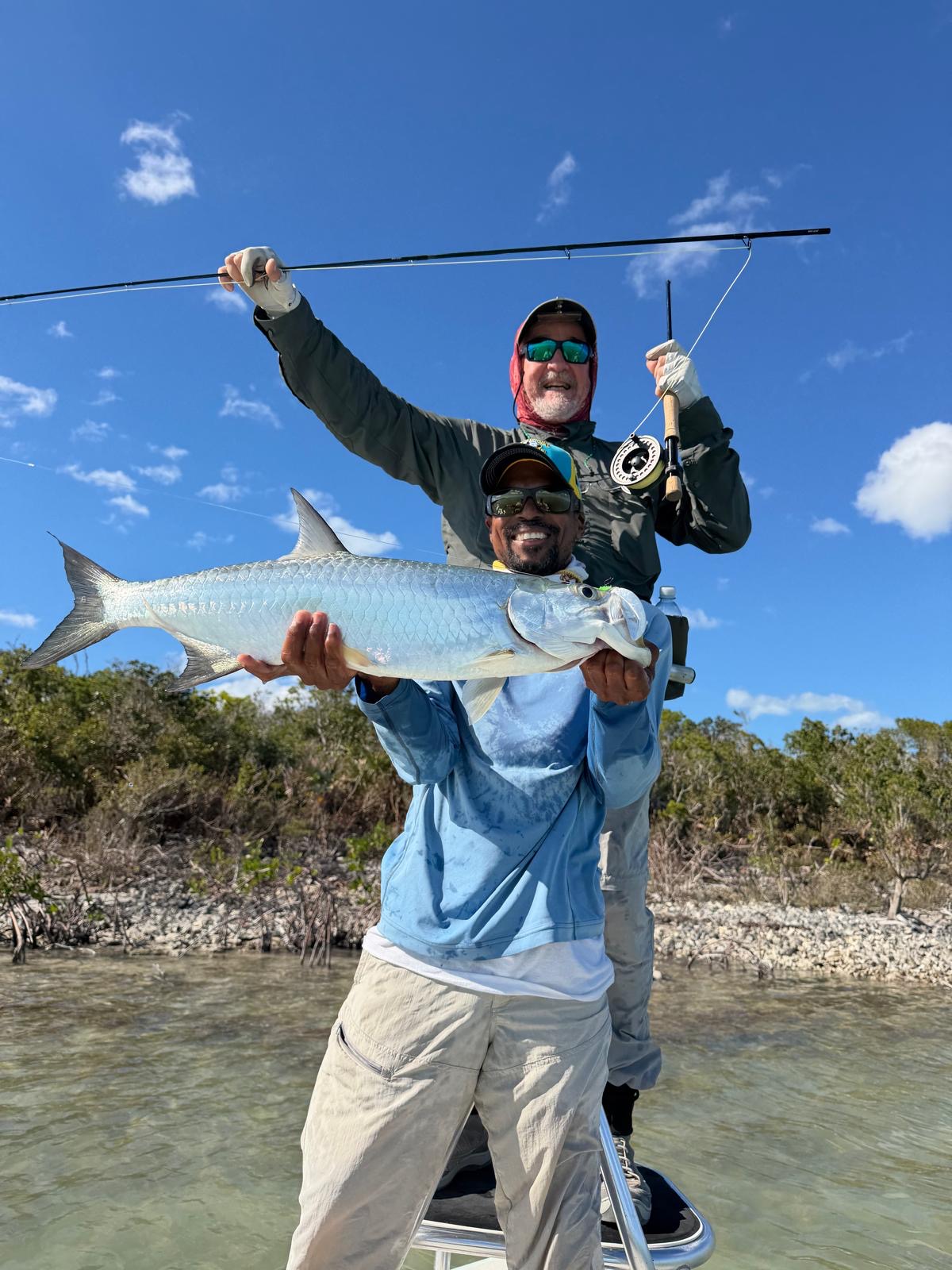
Several sessions in the first three days were particularly memorable. Bonefish in the 6–7lb range were landed, and larger fish were spotted and cast to. Permit showed themselves regularly to those who looked for them, adding an extra edge of anticipation. Toward the end of the week, Jonathan Ellis hooked a tarpon that snapped his Thomas & Thomas rod on the take — a chaotic moment that highlights the sometimes-unpredictable nature of saltwater fly fishing.
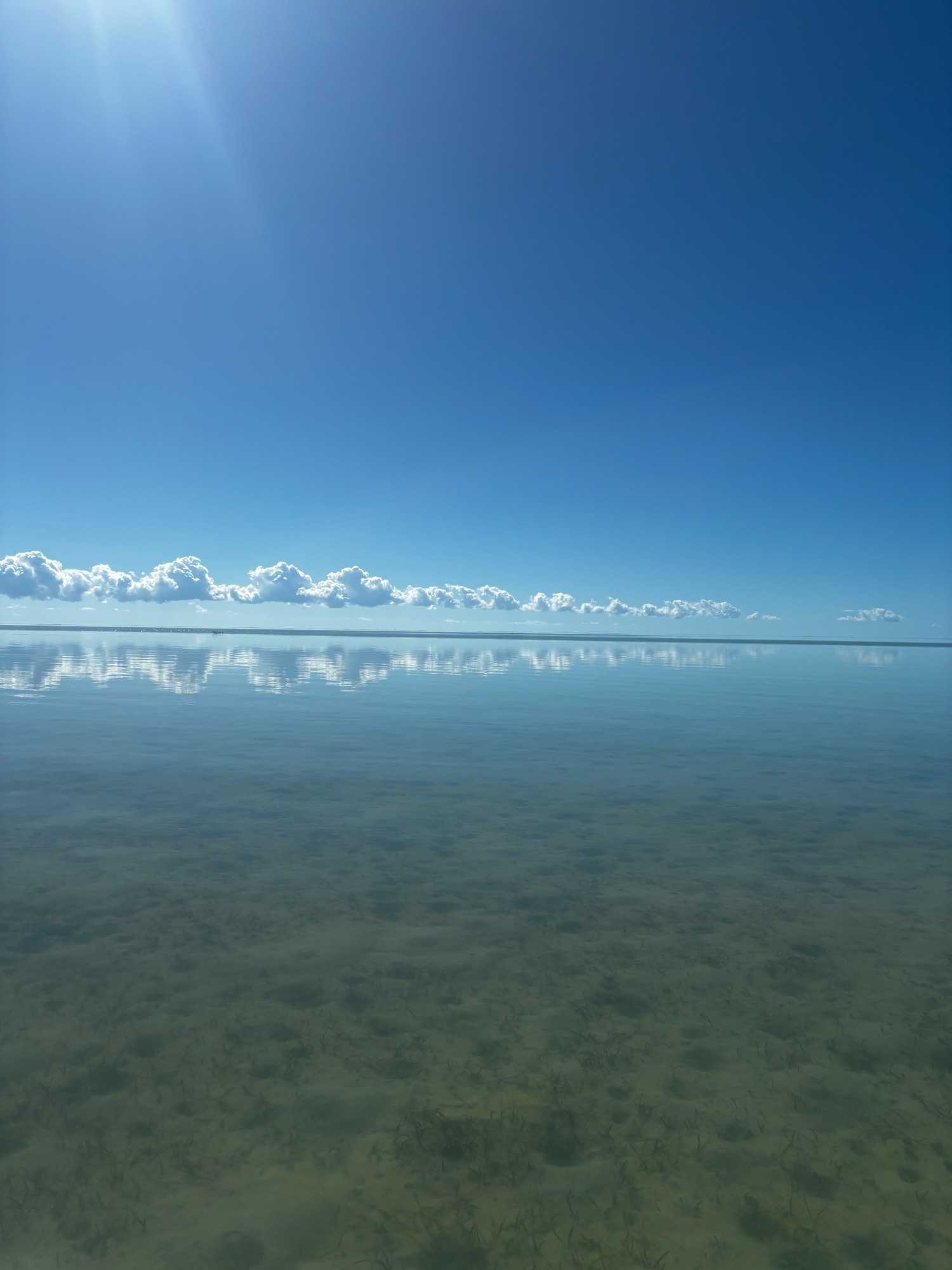
Some days brought cooler water, and fish moved off the shallows and became spookier, making accuracy and presentation more important. The variety of habitat on Crooked Island kept things interesting: mangrove creeks, broad open flats, turtle grass edges, and long stretches of sand. Wading was excellent, and there is a particular satisfaction in moving across the flats, watching the subtle shifts in water and light, and spotting the occasional ghosting fish ahead.
Evenings were spent at Gibson’s Restaurant, where fresh, straightforward meals were served. The atmosphere was relaxed, and the camaraderie of the group added to the enjoyment. Stories of the day’s fishing flowed— missed fish grew larger in the telling, landed fish became more impressive, and some friendly banter kept folks engaged.
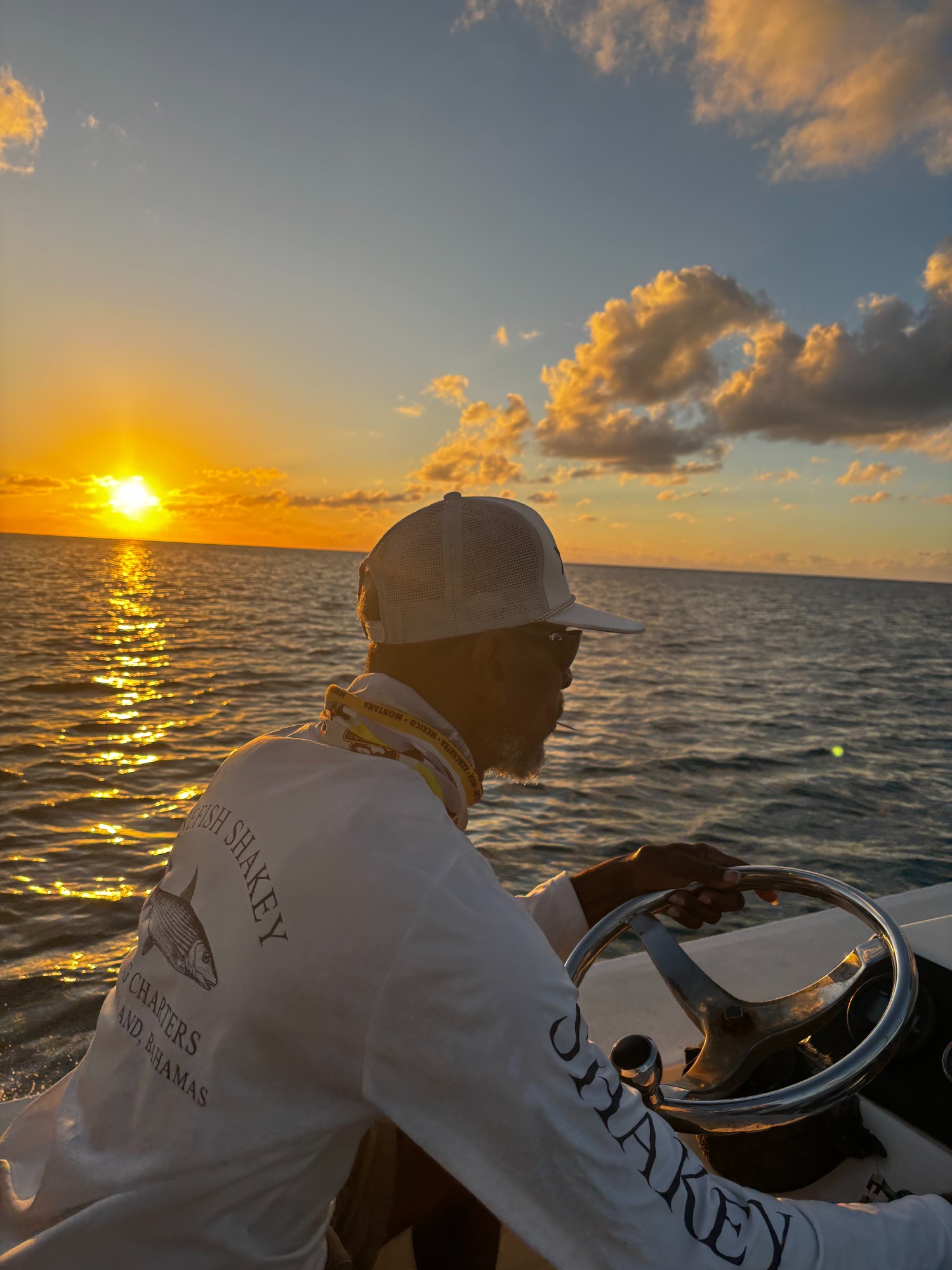
A highlight of the week was a day fishing with Elton “Shakey” McKinney. Shakey, one of the first guides on Crooked Island, is in his early 60s but remains sharp-eyed and enthusiastic. He knows every cut, channel, and mangrove tunnel. Spending time with him was as much a lesson in the history of the fishery as it was in technique, offering perspective on how guiding and the fishery have shaped life on the island.
Crooked Island is remote, and employment opportunities are limited. The flats fishery is one of the main sources of income, with around seventy cents of every dollar spent by visiting anglers staying locally. Hiring guides, eating at local restaurants, using local transport, and staying in local accommodation all directly support families. The Bahamas Tourist Board help make trips like these possible, and our wholehearted thanks go out to them for their continued support.
Crooked is quiet, uncommercialised, and largely untouched by mass tourism. Fishing pressure here is low, which is reflected in the quality of the bonefishing when everything comes good. After the uncertainty caused by Hurricane Melissa and the rough conditions of the first week, we knew we were lucky to see the fishery in such good shape.
One of the great things about destination fishing is that it takes you to places you might not otherwise visit, and spend time with people whose lives are closely tied to the water. Crooked Island is a perfect example - understated, alive with character, and quietly unforgettable. A huge thank you to Willie, her team, and all the guides who made the week so memorable.
We need your consent to load the translations
We use a third-party service to translate the website content that may collect data about your activity. Please review the details in the privacy policy and accept the service to view the translations.