CALL US TODAY - 020 8742 1556
CALL US TODAY - 020 8742 1556
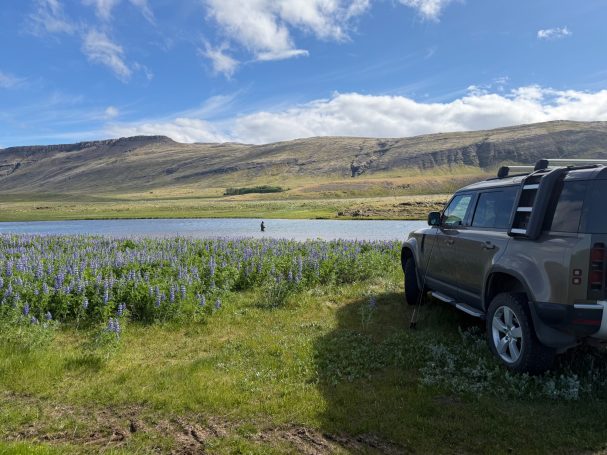
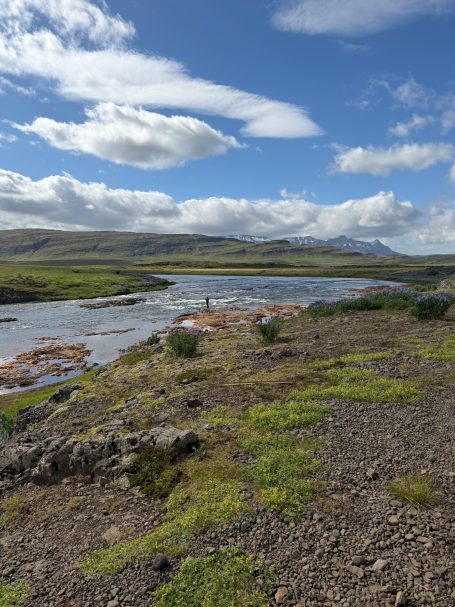
There are many reasons Iceland has become one of the world's great Atlantic salmon destinations. The rivers are beautiful, the scenery extraordinary, the people welcoming and the standard of accommodation, food and service at many lodges is very high.
Then, of course, there is the fishing. On the best rivers, the average catch per rod per day is among the highest anywhere in the world. Year after year, it remains an interesting and varied fishery, with each river having its own unique character.
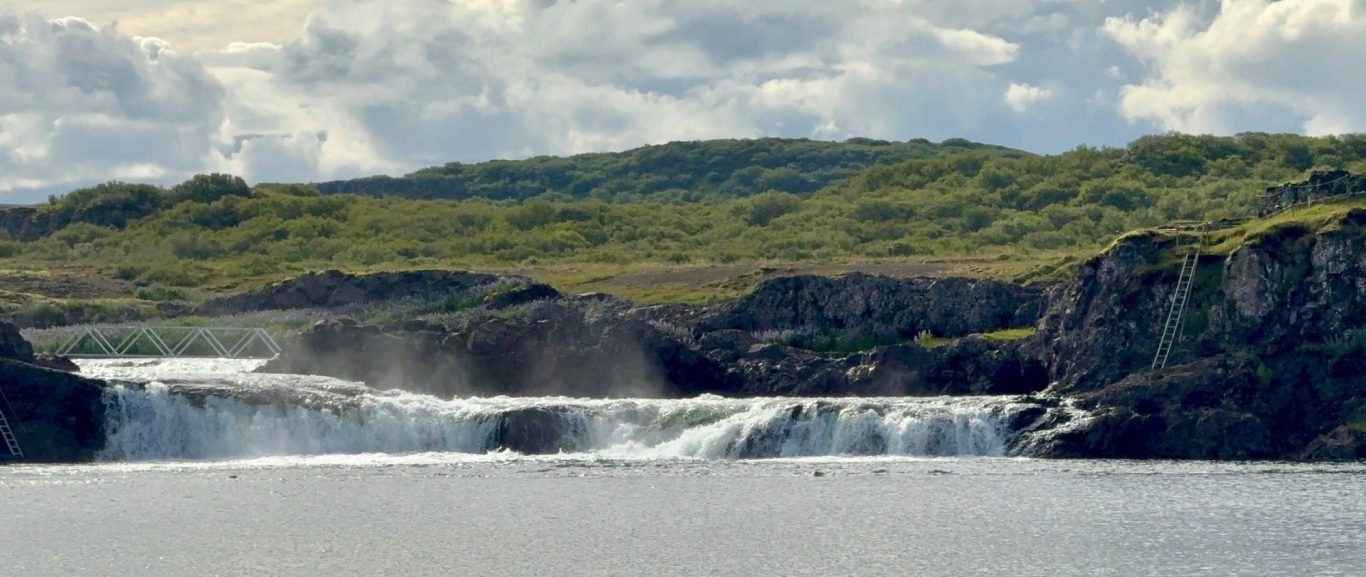
The start of the season
Similar to 2025, 2026 was a slow start on many rivers. On Grímsá, the season opens on 17 June and, whilst a few good fish were picked up early on, it wasn't a bonanza.
Every year, late June brings a series of big spring tides. This is typically when the main run of fish starts to build in many well-known west-coast rivers, and the picture can change quite quickly. One useful website for anyone interested is RiverWatcher Daily. It provides data from a number of rivers where counters record the migration.
On the west coast, two useful indicator rivers are the tiny Elliðaá, which runs through Reykjavík and has a counter near the bottom of the river, and the Langá, a neighbour of Grímsá, which also has a counter near the bottom. The Langá counter does not record every fish entering the river, as some can bypass it by jumping a nearby waterfall, but it nevertheless gives a useful indication of the wider picture.
Clicking on an individual river brings up a graph showing the measured migration and the dates. Obviously, every river has its own particular runs and there are variations between systems, but some general trends are interesting to observe. Typically, from around mid-June there is a steady trickle of fish each day. Towards the end of June and into July, numbers begin to rise, with the main runs often peaking around the middle of July.
The Langá counter illustrated this well in 2026. The first major push of fish came on 1 July, when 110 fish were recorded moving upstream in a day, with the water temperature at 10.3°C. The runs then continued to build through July, peaking around the 17th.
In general, having more fish counters would be beneficial. Concrete data is incredibly useful, both for understanding what is happening during a season and for comparing one year with another.
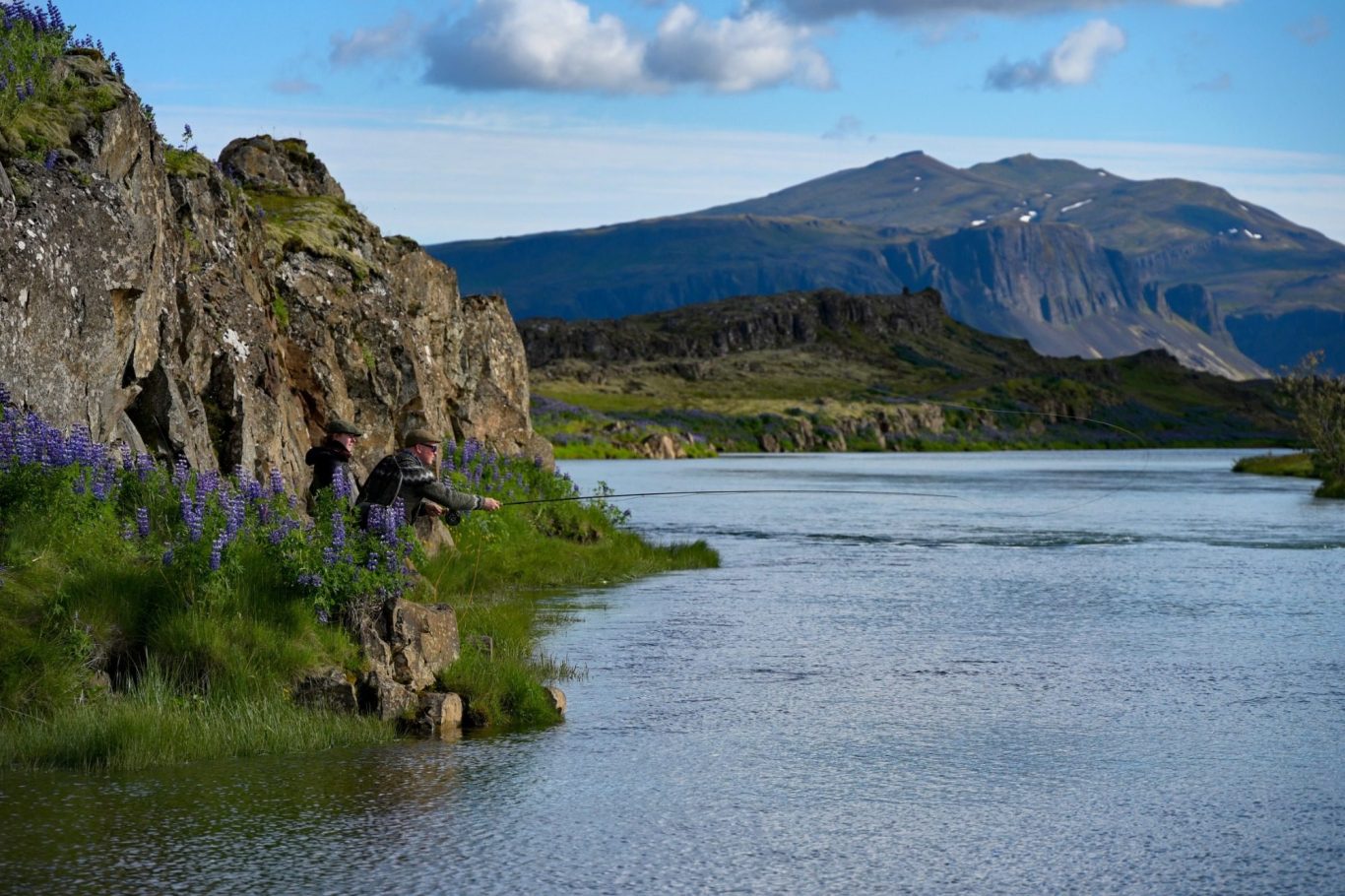
Predicting the run
Some interesting work is done in Iceland looking at conditions both in the rivers and at sea. Scientists monitor sea temperatures when the smolts are leaving, as well as conditions at their feeding grounds. This information is then used to make predictions about the strength and composition of the returning runs in subsequent years.
Of course, these predictions need to be taken somewhat with a pinch of salt. Atlantic salmon are migratory fish and there are a huge number of variables between a smolt leaving its home river and returning as an adult. Nevertheless, the prediction for 2026 was for a strong run of grilse, and we were pleased to see that this materialised.
Grímsá
Salmon fishing on the well-known rivers in Iceland is not cheap, unfortunately. The cost of leasing sought after rivers, running full-service lodges to a high standard, and generally paying for goods and services in Iceland is high. Nonetheless, we feel the quality does match the price, and it was fantastic to see Grímsá fishing well this year. GFWW had the majority of the rods from 28 June to 6 July. This is an important period in the season, sitting at the beginning of the main run as the river moves into prime time.
We were delighted to welcome an intact returning team for the first four-day slot. The fishing was just starting to get into gear at that point. 2026 brought a very wet summer in Iceland. From late June and into July this was certainly the case, and water levels were consequently quite high.
Grímsá is a very stable river. It is fed by a lake at the top, and it takes a lot of rain to bring the level up significantly. Even when this happens, it is rare for the river to colour up. High water can nevertheless be somewhat of a drawback. Fish generally prefer lower water conditions to run the lower river, and higher water allows those that do go over to spread out considerably more than usual.
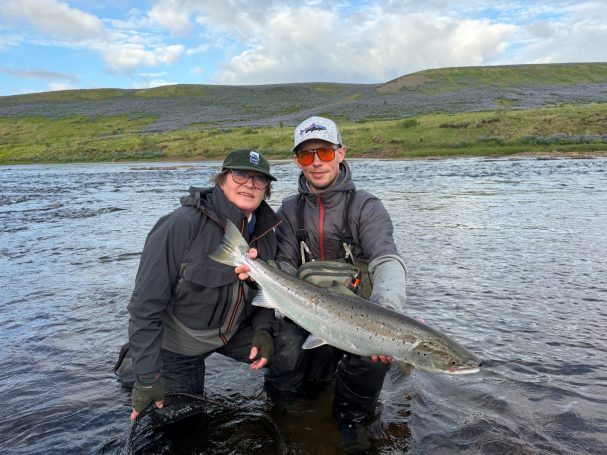
Nonetheless, the first four-day slot was a great success. Of the 14 anglers, every single person landed at least one Atlantic salmon. There are not many places in the world nowadays where you can travel for a short trip and have every member of a party catch a fish. The group included two anglers catching their first-ever salmon, as well as several landing their first from Iceland.
For an intact group of friends, taking over the whole lodge is also a particularly enjoyable way of doing it. It creates something of a house-party atmosphere, with everyone returning to the lodge and sharing the day's stories over dinner.
From 2–6 July we had another group, comprising some anglers who had fished together previously and others who were new to the river and lodge. The high water made things a little tricky, but there were still some magical sessions, with anglers landing multiple salmon in a morning. Over the course of a slot, the hope is that you will have one or two magic sessions that stick long in the memory after you have returned home. Iceland often seems to deliver on this front.
Sea trout
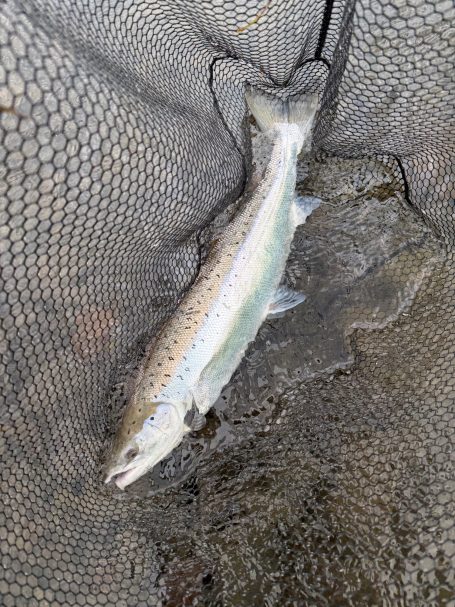
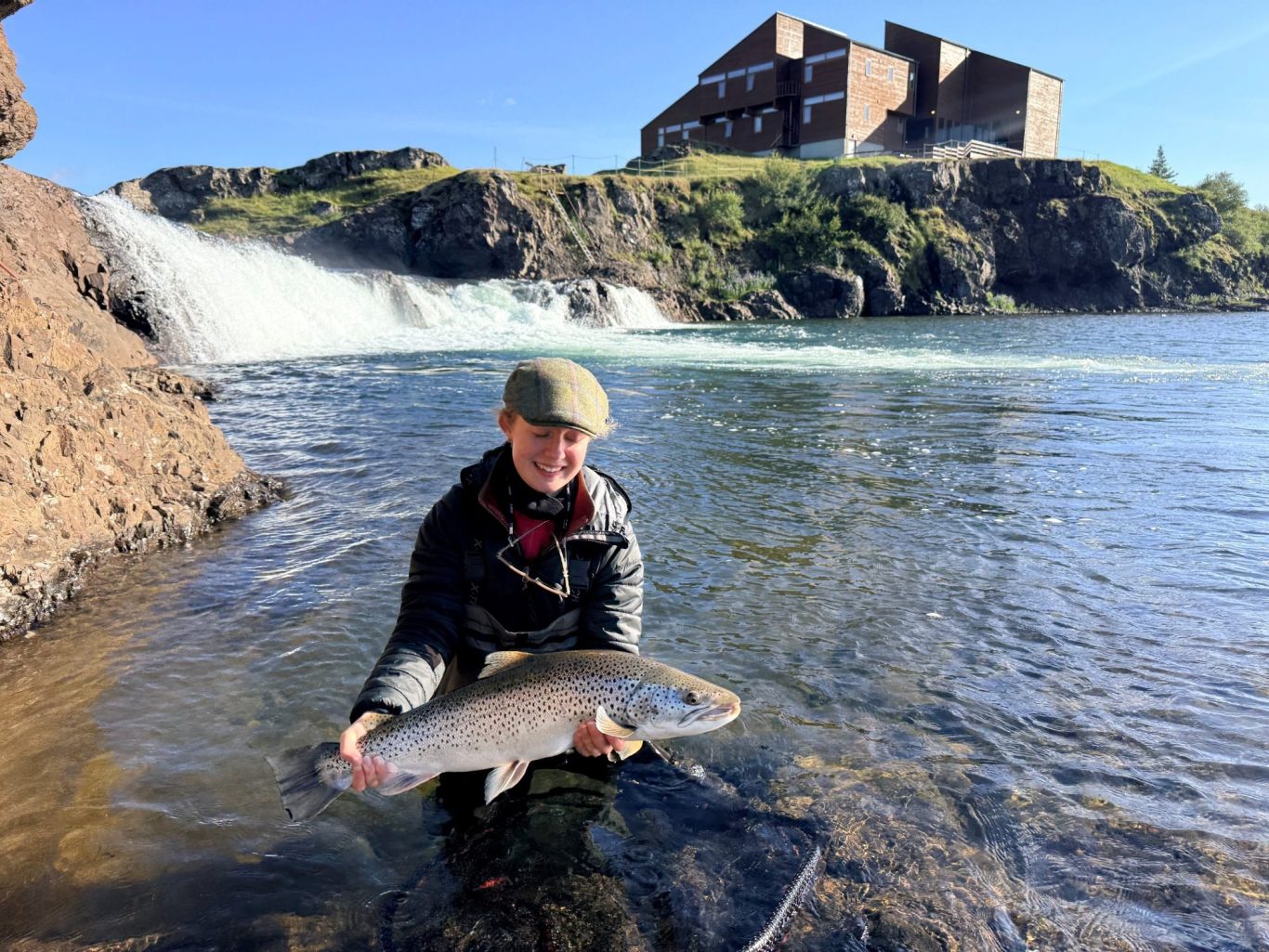
The sea trout fishing is another major benefit on Grímsá. In recent years, the numbers of sea trout seem to have been increasing. As more fish are now being released, the average size also appears to be going up. A typical Grímsá sea trout is in the 3–4 lb range, but fish of 4–8 lbs are commonly encountered and there is a realistic chance of coming across fish in the 8–10 lb range and beyond. Fresh-run and on relatively light tackle, these are a fantastic proposition.
The sea trout typically arrive from late June onwards, although this year they were a little later than usual. Alongside the salmon fishing, their presence is a major plus and they can make a trip in their own right. An example of such a sea trout is pictured below – this one measured 70 cm and was close to 10lbs.
Beat rotation
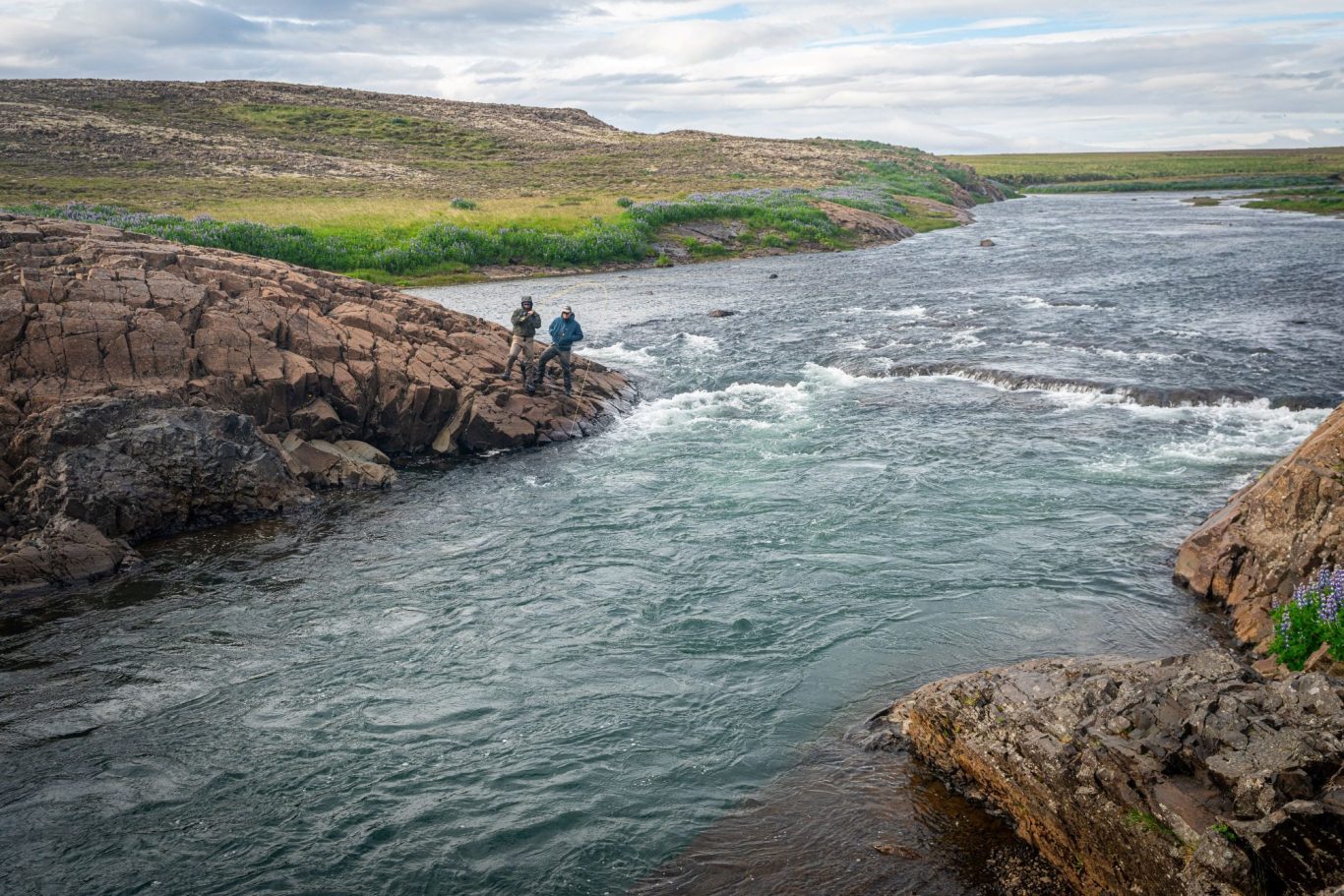
One of the things that is useful for anyone new to Iceland to understand is how the fishing is organised. Icelandic salmon fishing is generally based around a beat rotation. On Grímsá, for example, there are eight rods fishing four beats across approximately 30 km of water, with two rods and a guide allocated to each beat.
At the start of the trip, you draw for your starting beat. If you start on Beat 4 on the first afternoon, the following morning you move to Beat 3, that afternoon to Beat 2, and so on. This ensures that the water is rotated through fairly. Inevitably, some sessions will be slower than others and there is an element of luck involved, particularly in the early season when the fishing is typically improving on a daily basis. One day you can go to a pool and find it quiet; the next session a pod of 20 fish might have moved in. I find this makes it a very exciting period to guide.
Everything you land is typically incredibly fresh, often carrying lice, and given half decent conditions the fish can be very willing takers. Some put this down to Iceland's proximity to the feeding grounds. Whatever the reason, it is very special fishing over fresh-run fish in gin-clear water.
Light tackle and surface flies
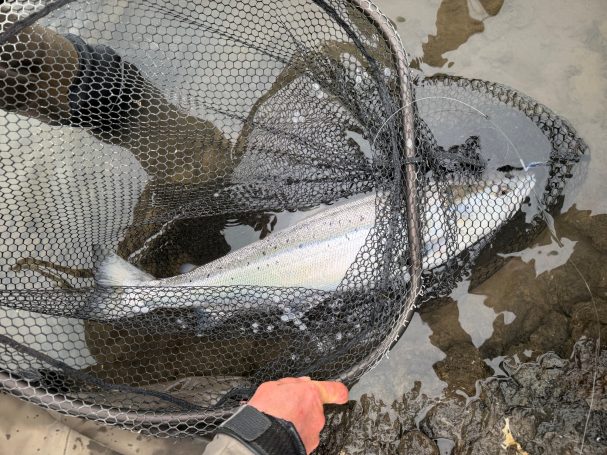
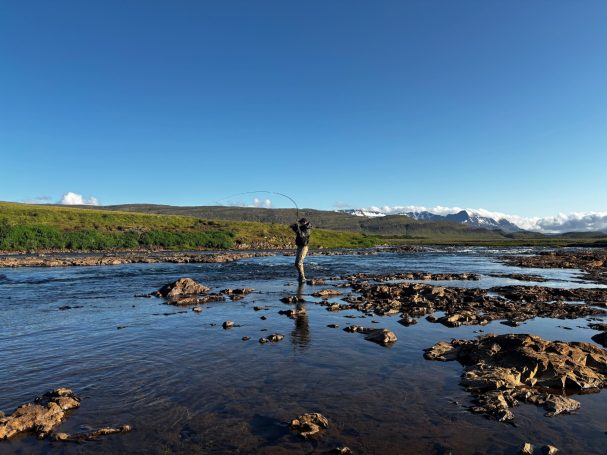
The joy of Grímsá, and many Icelandic rivers, is fishing relatively light tackle. It depends somewhat on conditions (Iceland can be windy), but a 9'6" six- or seven-weight is often ideal. Many anglers also utilise a lightweight switch rod. A well conditioned 65 cm fresh-run grilse is great fun on such tackle.
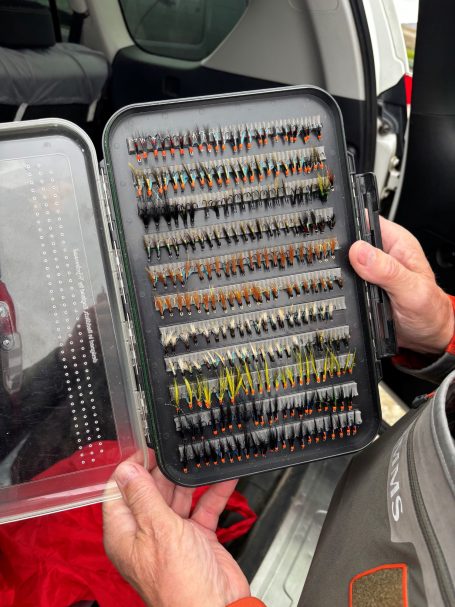
The fishing is done entirely with floating lines, with small surface flies effective. Small hitched tubes, or size 14 - 16 doubles or micro trebles, often work well. In the clear water it can be possible to see a fish follow the fly and take. For many anglers, this visual element is what makes Iceland so appealing. It is salmon fishing, but it can be intimate and visual rather than simply casting large flies on heavy tackle.
Iceland has sometimes been described as the 'university of salmon fishing'. The clear water and surface orientated fishing allow you to see so much of what is happening, and there is an enormous amount to learn from watching how individual fish react.
The lodge experience
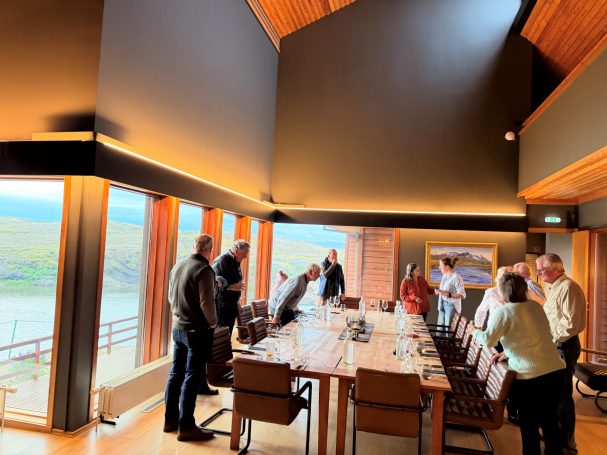
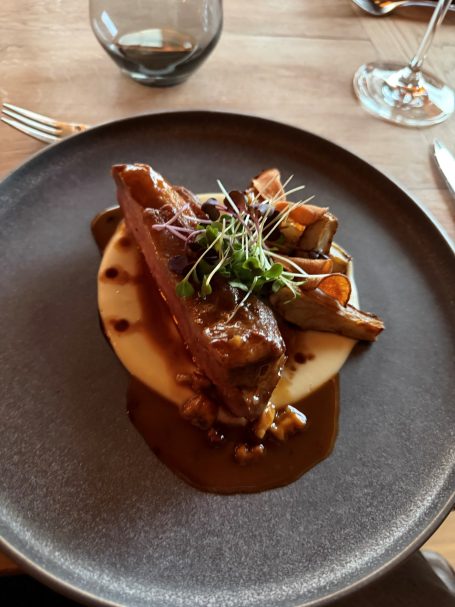
The standard of food and service at the lodges we work with in Iceland is very high. When the fishing is slow, it becomes important to come back to a comfortable lodge and an excellent meal. Grímsá excels in this regard. When the fishing is good, as it was for much of this year, then the lodge experience is an added delight.
This is an important part of the Icelandic experience. A day on the river is followed by good food, comfortable accommodation and the chance to sit with other anglers and talk through the day's fishing.
The pricing of individual slots largely correlates with the five-year average catch for those dates. As a guide team, we are generally looking for our rods to be at least hooking a fish each fishing session. It doesn't always work out that way — it is fishing for migratory fish, of course— but when on form, Iceland offers world-class fishing. The average catch per rod per day on the better rivers compares extremely favourably with almost anywhere else in the Atlantic salmon’s range.
A welcome return in 2026
Dealing with migratory fish is inherently uncertain, and runs vary from year to year. 2025 was slower than many rivers would have liked, so it has been particularly encouraging to see a welcome bounce back in 2026.
On Grímsá, by 19 August, around two months into the season, 706 Atlantic salmon had been logged on the eight daily rods. This represented a significant increase on the same point in 2025, and the river should finish the season above 1,000 fish.
Grímsá is just one example. Across much of Iceland, the general picture has been encouraging, and 2026 has provided a useful reminder of how good this fishery can be.
Finding the right river
Good quality salmon fishing in Iceland is in high demand. GFWW are fortunate to have excellent relationships with a number of the principal leaseholders and operators in Iceland. Although availability is generally limited, we can often offer excellent slots on some of the top rivers in the country, including opportunities that are not otherwise available.
After five seasons of guiding in Iceland, one of the things I have come to appreciate most is how different the rivers are. Each has its own personality and suits different types of anglers.
We have fished all of the rivers we represent in recent years. As a result, we have a good working knowledge of the individual beats, the tackle that suits them, how the fishing tends to develop through the season and what type of angler is likely to enjoy each one.
Some clients want a full-service lodge and the complete Icelandic experience. Others are more interested in keeping the cost down and would be better suited to a self-catering lodge. Some want to fish early season for fresh-run salmon, some are particularly interested in sea trout, whilst others are looking for the period with the highest historical catch rates.
Our role is to understand the angler, understand the rivers and match the right person to the right river at the right time. Grímsá is my home river and I have got to know it very well. It remains a destinaiton we enjoy sending people to, because it offers such a good combination of fishing, scenery, accommodation and hospitality. As such, it rarely fails to provide a memorable experience.
For any fishing we offer, we are very happy to provide the five- and ten-year catch statistics for the corresponding week, which is useful when comparing rivers, dates and prices.
The rivers
Go Fishing Worldwide currently offers salmon and sea trout fishing on:
Grímsá
Laxá í Dölum
Svalbarðsá
Miðfjarðará
Jökla
West Ranga
Brynjudalsá
Skuggi
Each has its own personality and suits different anglers and different preferences. We know these rivers well and are very happy to advise on which would be the best fit, including the appropriate tackle, timing and style of fishing.
Alongside the salmon and sea trout fishing, we can also arrange excellent brown trout fishing on the Minnivallalækur and Big Laxá systems, and occasionally exceptional dedicated sea trout fishing on the Tungufljót.
First refusal for the following season
One important thing to understand when planning an Icelandic salmon fishing trip is the first-refusal process. Each year, anglers who have fished a particular rod are typically offered first refusal on that same rod for the following season. This process generally begins around September / October time.
Many anglers return to the same river, often for the same slot, year after year. It is easy to understand why. Once you have found a river and a week that suits you, there is often an appeal in returning to the same place and building on that experience.
It does mean that the most desirable dates can be committed well in advance. Equally, as anglers make their decisions, some availability typically comes back onto the market. Through our relationships with the various rivers and leaseholders, we hope to be able to offer some of these opportunities to new clients.
Many people have already been in touch with us about 2027. If Iceland has been on your list, particularly if you have specific dates or a particular river in mind, we would recommend making contact early.
Iceland is a specialist area for us, and one we are very proud to represent. The combination of beautiful rivers, extraordinary scenery, excellent hospitality and some of the best Atlantic salmon fishing in the world makes it a difficult destination to beat. The 2026 season has been an excellent reminder of that.
If Iceland is on your to-do list, please let us know. We would be delighted to help.
We need your consent to load the translations
We use a third-party service to translate the website content that may collect data about your activity. Please review the details in the privacy policy and accept the service to view the translations.